
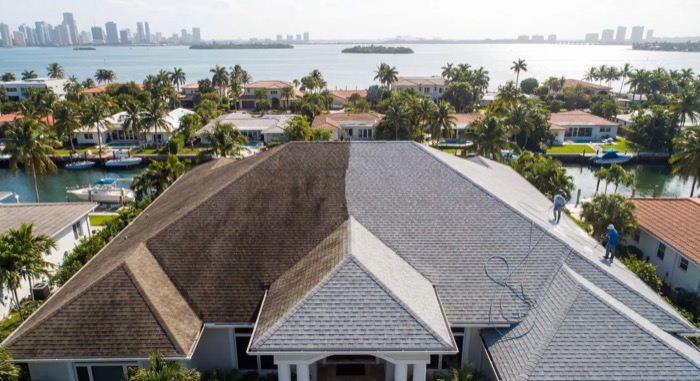
The streaks are algae, not stains
Those black streaks are a hardy blue-green algae called Gloeocapsa magma. It feeds on the limestone filler in asphalt shingles and protects itself with a dark, UV-resistant coating — which is exactly what you see running down the roof. It is alive, and it spreads.
Why South Florida roofs are a magnet
Algae thrives in heat, humidity, and moisture, and we have all three year round. Add frequent rain, tree shade that keeps roofs damp, and salt air near the coast, and South Florida becomes close to ideal growing conditions. North-facing and shaded slopes usually streak first.
Why you should never pressure wash a roof
It is tempting to blast the streaks off, but high pressure on a roof lifts and cracks shingles and tiles, strips the protective granules that give a roof its lifespan, and forces water underneath where it does not belong. It can also void your manufacturer warranty. The quick fix becomes an expensive repair.
How soft washing removes it
Soft washing uses low pressure and a professional cleaning solution that kills the algae at the root and rinses it away. Because it treats the organism instead of blasting the surface, the roof comes clean without damage and stays clean noticeably longer.
Will it come back?
Eventually — this is South Florida. But a proper soft wash sets the clock back significantly, and most roofs only need attention every one to two years depending on shade and tree cover.
The risks of doing it yourself
Beyond the danger of working on a wet, sloped roof, DIY roof cleaning usually means the wrong pressure, the wrong chemicals, and runoff that can harm landscaping. A trained crew protects your plants, your roof, and themselves.
Ready to clear the streaks the right way?
We soft wash tile, shingle, and metal roofs across South Florida. Get a free, no-pressure quote today.